Menu


A criminal record does not disappear on its own. Whether you were arrested and never convicted, completed a diversionary program, or received a conviction years ago, that record can still surface in background checks and hold you back from employment, housing, and professional opportunities. For residents across Camden County, including Cherry Hill, Camden, Voorhees, Gloucester Township, Pennsauken, and Haddonfield, expungement under New Jersey law provides a legal path to clear that record and move forward.
At Iannelli Law, we guide individuals in Camden County through the expungement process, from evaluating eligibility to filing the petition and appearing in court if necessary. If you are ready to take the first step, contact our office to schedule a free consultation.
“Expungement” is a court-ordered legal process that isolates specific criminal records from public access. Under New Jersey law (N.J.S.A. 2C:52-1), expungement covers the extraction and sealing of records held by courts, law enforcement agencies, and other criminal justice entities, including arrest records, complaints, fingerprints, photographs, rap sheets, and judicial dockets.
Once a judge grants an expungement and agencies process the order, the record should no longer appear in routine background checks. In most circumstances, a person with an expunged record may legally treat the matter as though it never occurred and is not required to disclose it on job or housing applications. Expungement is not automatic; it requires filing a verified petition with the Superior Court in Camden County and satisfying strict statutory requirements.
Across Camden County, employers, landlords, professional licensing boards, and financial institutions routinely run background checks. A prior arrest or conviction, even one that was dismissed, can appear without context and influence hiring decisions, rental approvals, and license applications long after the matter was resolved. Expungement changes what shows up in those searches. Residents of cities like Cherry Hill, Camden City, Collingswood, Lindenwold, and other communities throughout the county who clear their records through expungement no longer have to explain or defend a past charge every time they apply for something new.
New Jersey law allows expungement of a wide range of offenses and record types, subject to eligibility rules and waiting periods. The following may qualify:
Certain serious offenses cannot be expunged under New Jersey law, including homicide, kidnapping, robbery, and sexual assault. Eligibility also depends on the total number and nature of prior convictions. A thorough review of your complete criminal history is the first step before any petition is filed.
Meeting the required waiting period is a threshold requirement for expungement eligibility. Under New Jersey law, the standard timelines are:
New Jersey’s “Clean Slate” law provides an additional pathway that can make an entire record of eligible offenses inaccessible after approximately 10 years from the most recent qualifying event. Not every case qualifies automatically, and record errors or unresolved obligations can delay or block relief even under Clean Slate.
Filing for expungement in Camden County requires strict compliance with Superior Court procedures. The process includes verifying eligibility and waiting period compliance, gathering certified court dispositions and docket records, preparing a verified petition with all required supporting documentation, and filing in Camden County Superior Court. The petition must then be formally served on required agencies, including the Camden County Prosecutor’s Office, the Attorney General, the New Jersey State Police, and the arresting law enforcement agency. If any agency objects, a hearing will be scheduled. Once a judge grants the “Order of Expungement,” confirmation that all relevant agencies update their records is the final step.
Errors in documentation, eligibility analysis, statute citations, or service of process can lead to denial. A denied petition typically requires refiling, additional costs, and extended delay. Working with an experienced expungement lawyer from the start reduces that risk.
Yes. Arrests that did not result in a conviction, including dismissed charges and not-guilty findings, are generally eligible for expungement in New Jersey. In some cases, these are processed automatically, but filing a formal petition ensures the record is properly cleared across all agencies.
Timelines vary based on the complexity of the record and the court’s schedule. Straightforward cases often resolve within a few months. Cases involving multiple offenses or older records can take longer, particularly if the Camden County Prosecutor’s Office or another agency raises objections that require a hearing.
An Order of Expungement directs courts and law enforcement agencies to remove the record from their systems. Private background check companies may not update immediately, so it is important to follow up after the order is issued to confirm the record has been cleared across relevant databases.
In most cases, an expunged record will not appear in routine background checks, and you are not required to disclose it. However, certain government employers, law enforcement agencies, and professional licensing bodies may retain access under specific exceptions in New Jersey law. A lawyer can explain how those exceptions may apply to your situation.
Eligibility depends on the offense type, the number and nature of prior convictions, the time elapsed since completing your sentence, and whether all fines and court-ordered obligations have been satisfied. The best way to determine eligibility is to consult with a Camden County expungement lawyer.
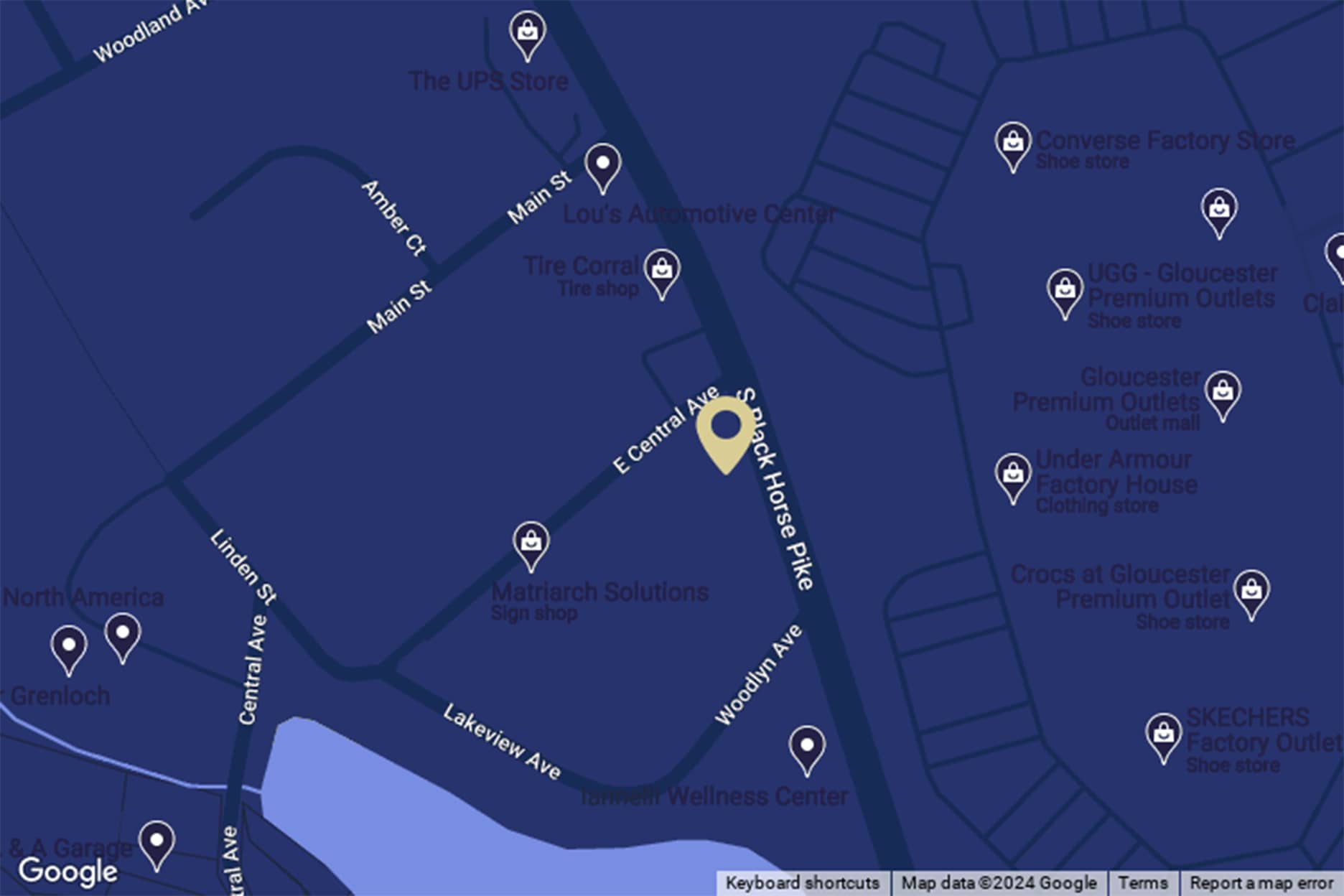
A Camden County expungement lawyer at Iannelli Law will review your full criminal history before filing, identify potential issues in advance, prepare petitions that are built to withstand prosecutorial review, and represent you at court hearings when required. For a free consultation, call today at 856-227-2434 or complete our online form. Located in Blackwood, New Jersey, we proudly serve clients in the surrounding areas.
© 2026 Law Offices of John Iannelli
| View Our Disclaimer | Privacy Policy